
The Ultimate Sweet Potato Casserole Recipe
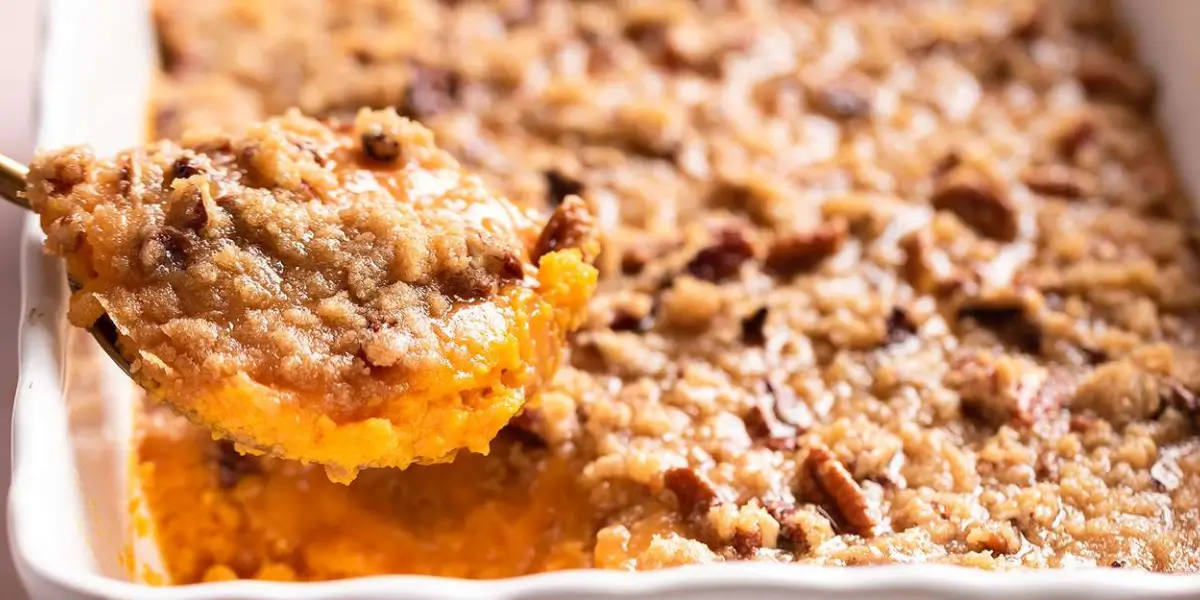
You know the moment. The Thanksgiving table is groaning under the weight of turkey, stuffing, and greens, but your eyes are drawn to that one dish—the one glistening with melted marshmallows or crowned with a crunchy, buttery pecan streusel. It’s the dish that signals the holidays have officially arrived, and for many of us, that dish is the incomparable sweet potato casserole.
It holds a special place in my own memories. Growing up, the smell of cinnamon and brown sugar filling the house was the official countdown to dinner. But for years, my version was just okay. Sometimes it was watery, other times the topping burned. It wasn’t until I unlocked a few crucial secrets that my casserole transformed from a good side dish into a legendary centerpiece.
Now, I’m going to share the ultimate formula with you. This isn’t just a recipe; it’s a deep dive into the science and tradition behind making the absolute best sweet potato casserole recipe your family has ever tasted. Whether you’re a marshmallow purist or a streusel enthusiast, get ready to elevate your holiday table with a casserole that’s creamy, rich, perfectly spiced, and undeniably unforgettable.
Ready to claim your crown as the holiday feast MVP? Let’s dive into the essential components that will make your next sweet potato casserole a masterpiece.

sweet potato casserole recipe
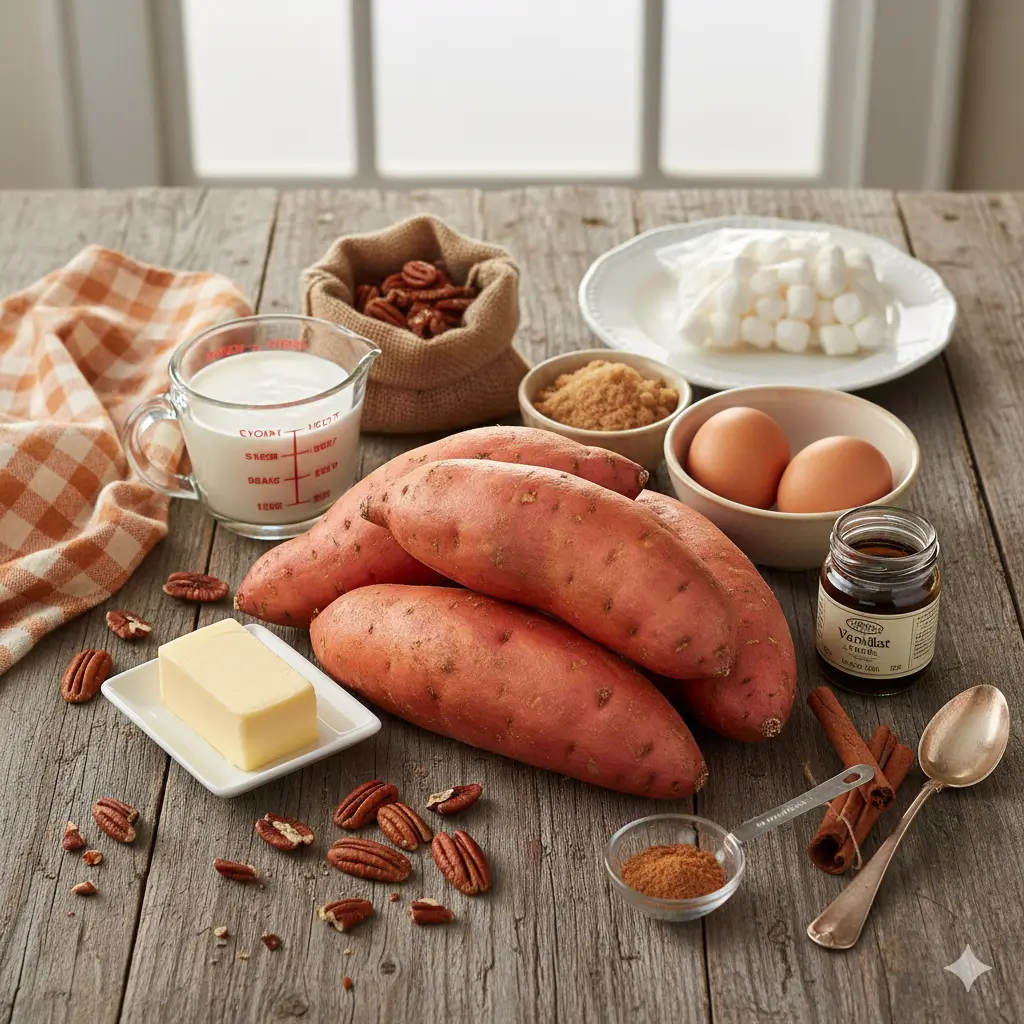
Ingredients
Method
- Preheat oven to $375^{circ}text{F}$ ($190^{circ}text{C}$).
- Roast or bake sweet potatoes until fork-tender; cool slightly, then scoop the flesh into a large mixing bowl. Discard skins.
- Add all remaining base ingredients: melted butter, brown sugar, heavy cream, beaten eggs, vanilla extract, cinnamon, nutmeg, and salt.
- Mash or mix the ingredients until they are just combined and the mixture is smooth and free of lumps. Do not overmix
- Spread the mixture evenly into a lightly greased $9 times 13$-inch casserole dish.
- Bake the base for 25 minutes at $375^{circ}text{F}$. Remove from oven and prepare for topping application (pecan streusel added now, marshmallows added later).
Mastering the Classic Sweet Potato Casserole Base
The foundation of a truly great sweet potato casserole is a velvety smooth, perfectly seasoned base. If this layer is watery, gritty, or under-seasoned, no amount of glorious topping can save it. We’re aiming for a texture that is light and airy, yet substantial enough to hold up on your plate.
Selecting the Best Sweet Potatoes (Yams vs. Sweet Potatoes)
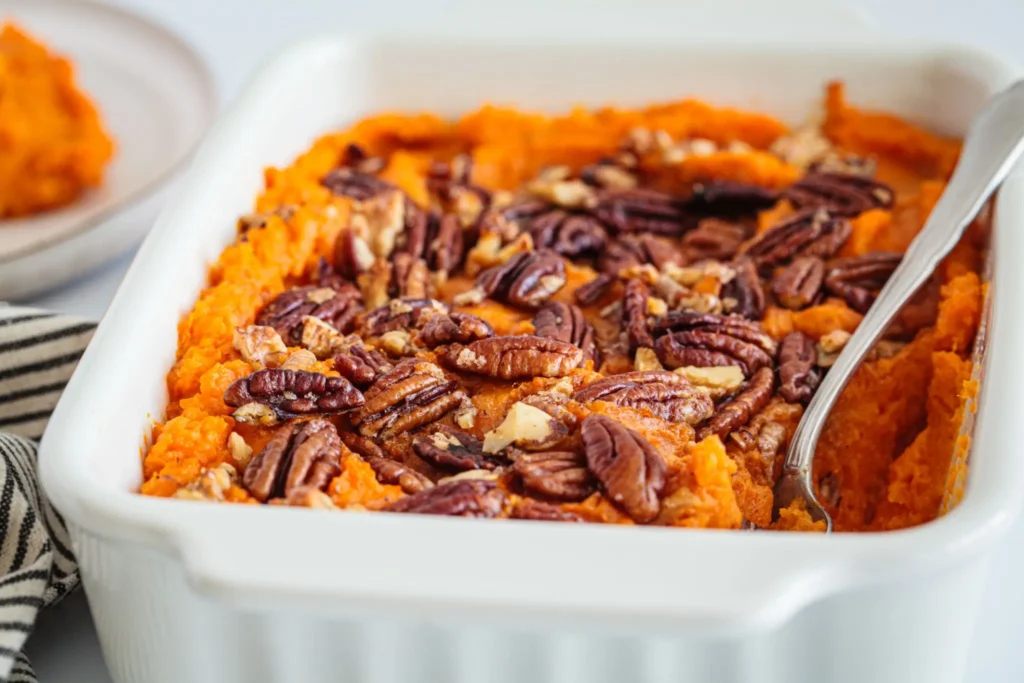
This is where many home cooks get confused, and it’s a critical first step. When your recipe calls for “sweet potatoes,” you should look for the varieties with deep orange flesh and reddish-brown skin, like the Jewel or Garnet varieties. These are rich in moisture and naturally sweet, which makes them ideal for a creamy mash.
Crucial Distinction: True yams have rough, scaly, darker skin and starchy, white/purple flesh. The “yams” you see labeled in most American grocery stores are actually a misnomer for the soft, orange-fleshed sweet potatoes we want. Stick to the orange ones for your perfect sweet potato casserole.
The best cooking method? Bake or roast the potatoes whole, with the skin on, until they are easily pierced with a fork. Boiling them introduces too much water, which dilutes the flavor and results in that frustratingly watery casserole base. Roasting concentrates their natural sugars, intensifying the sweetness and the depth of flavor.
The Creamy Secret: Achieving the Perfect Texture
Once your potatoes are fork-tender and slightly cooled, it’s time for the mash. But simply smashing them isn’t enough. The secret to that luxurious, creamy texture lies in a few key additions:
- Fat: Unsalted butter is non-negotiable. It provides richness and depth. Melt it thoroughly before adding.
- Dairy: Whole milk, evaporated milk, or even a splash of orange juice (for a slight tang) can be used, but heavy cream delivers the most decadent results. Don’t be shy; this is a holiday dish!
- Binder: Eggs are vital. They act as a binder, helping the casserole set and preventing it from becoming a liquid pile on the plate. They also add richness.
- Spice & Sweetness: This is where you bring the classic flavor to life. A generous amount of brown sugar (not white sugar), cinnamon, and nutmeg (or pumpkin pie spice) are mandatory. A pinch of salt is crucial, as it balances the sweetness and makes the flavors pop.
Pro-Tip on Mashing: Use a hand mixer or even a food processor sparingly to blend the ingredients. Over-mixing can break down the starches and lead to a gummy, gluey texture. Mix just until combined and smooth.
Topping Wars: Marshmallows vs. Pecans (and Beyond!)
The topping is the crown jewel of the sweet potato casserole. It’s the visual masterpiece that determines which side of the holiday debate you fall on. While both the marshmallow and the pecan streusel are iconic, they offer completely different textural experiences.
The Nostalgic Choice: The Gooey Marshmallow Topping
For many, a sweet potato casserole isn’t complete without a layer of golden-brown, melted marshmallows. It’s the ultimate comfort topping—a soft, sticky, and incredibly sweet addition that evokes childhood memories.
Marshmallow Pro-Tips:
- Timing: Don’t put the marshmallows on too early! If you bake them for the full casserole time, they will melt completely into a sticky, impossible mess. Add them only during the last 5 to 10 minutes of baking, or until they puff up and turn golden brown.
- Coverage: Use mini marshmallows for better, more even coverage, or slice large marshmallows in half for dramatic effect.
- Browning: For that perfect toast, switch your oven to the broil setting for the final minute, but watch them constantly—they can go from perfectly golden to burnt in seconds!
The Grown-Up Choice: The Crunchy Pecan Streusel Topping
If you prefer a less intensely sweet dish or want a satisfying textural crunch, the pecan streusel topping is your sophisticated choice. It’s buttery, nutty, slightly salty, and complements the sweet potato base beautifully.
To make a truly phenomenal pecan streusel for your sweet potato casserole, you need three components in balance:
- Fat: Cold, cubed butter is essential.
- Dry Ingredients: A mix of all-purpose flour, brown sugar, and a touch of white sugar.
- Flavor/Texture: Chopped pecans, cinnamon, and a pinch of salt.
The key here is to use the cut-in method, similar to making pie crust. Use your fingers or a pastry cutter to incorporate the cold butter into the dry ingredients until the mixture resembles coarse crumbs. This creates that wonderfully crisp, crumbly texture. You can apply this topping right from the start of the bake.
Sweet Potato Casserole: Pro Tips for Planning and Prep
The holidays are stressful enough without trying to manage a dozen dishes at the last minute. The beauty of a great casserole is that it’s inherently a make-ahead dish, which is essential for a stress-free celebration.
Make-Ahead Magic: Prepping for Stress-Free Holidays
You can prepare almost your entire sweet potato casserole up to two days in advance, allowing you to focus on the main course on the big day.
- Prep the Base: Completely cook, mash, mix, and season the sweet potato mixture. Place it into your prepared baking dish (lightly greased). Cover the dish tightly with foil and refrigerate for up to 48 hours.
- Prep the Topping: Mix the pecan streusel topping completely and store it in an airtight container in the refrigerator (or even the freezer). Keep the marshmallows sealed at room temperature.
- Baking Day: When ready to bake, let the casserole base sit at room temperature for about 30 minutes. Add the pecan topping immediately and bake as instructed. If using marshmallows, bake the casserole first, then add the topping for the last 10 minutes (see Marshmallow Pro-Tips above).
Troubleshooting Common Casserole Problems
Every cook runs into issues, but with these fixes, you can ensure your sweet potato casserole comes out perfectly every time.
| Problem | Cause | Solution |
| Watery Casserole | Too much moisture from boiling potatoes, or excess liquid added. | Always roast your potatoes. If already mashed, try stirring in 1-2 tablespoons of flour or cornstarch before baking to absorb excess liquid. |
| Gummy/Gluey Texture | Potatoes were over-mixed in a food processor, breaking down starches. | Next time, use a hand masher or only mix with a hand mixer until just combined. There’s no fix once it’s cooked, but it’s still delicious! |
| Burnt Pecan Topping | Too much butter, or oven temperature is too high. | Cover the top lightly with foil for the first half of the bake time, then remove it for the last half to allow it to crisp up without burning. |
| Tastes Flat | Not enough seasoning or not enough salt. | Don’t underestimate salt! It’s crucial for balancing sweetness. Next time, add a quarter teaspoon more of salt, cinnamon, and vanilla extract. |
The Ultimate Sweet Potato Casserole Recipe Table
Here is the exact recipe for the base, designed for optimal creaminess and flavor, which can be topped with either the classic marshmallow or the crunchy pecan streusel.
| Component | Ingredient | Quantity | Notes |
| Base | Sweet Potatoes (Orange Flesh) | 4 lbs | Baked/Roasted until tender. |
| Unsalted Butter, Melted | 1/2 cup (1 stick) | Essential for richness. | |
| Brown Sugar, Packed | 1/2 cup | Adjust to taste, depending on potato sweetness. | |
| Heavy Cream | 1/4 cup | Or evaporated milk for a rich flavor. | |
| Eggs, Lightly Beaten | 2 large | The binder that holds it all together. | |
| Vanilla Extract | 1 tsp | Enhances all the other sweet flavors. | |
| Cinnamon & Nutmeg | 1 tsp each | Adjust spices to your preference. | |
| Salt | 1/2 tsp | Crucial for flavor balance. |
Instructions for the Base:
- Preheat oven to $375^{\circ}\text{F}$ (or $190^{\circ}\text{C}$).
- Scoop the cooked sweet potato flesh into a large bowl.
- Add all remaining base ingredients. Mash or mix until just combined and smooth.
- Spread the mixture evenly into a greased $9 \times 13$-inch casserole dish.
- Bake (without topping): Bake for 25 minutes. Then add the topping and follow the topping instructions below.
Topping Comparison Table: Choose Your Side
| Topping | Main Ingredients | Texture/Flavor Profile | Application Method |
| Marshmallow | Mini Marshmallows | Gooey, sticky, ultra-sweet, pillowy. | Add only in the last 5-10 minutes of the bake. |
| Pecan Streusel | Chopped Pecans, Brown Sugar, Flour, Cold Butter, Cinnamon | Crunchy, buttery, nutty, slightly salty contrast. | Apply before baking the casserole. |
Frequently Asked Questions (FAQ)
Q: Can I use canned sweet potatoes to make a sweet potato casserole?
A: While you can use canned sweet potatoes to make a sweet potato casserole, we strongly recommend against it for the ultimate flavor experience. Canned sweet potatoes often contain high amounts of water and added syrup, which results in a less flavorful, mushier base. To achieve that rich, concentrated flavor and perfect texture, taking the extra step to roast or bake fresh sweet potatoes is always the best choice for your sweet potato casserole.
Q: Why did my sweet potato casserole turn out runny and not set?
A: The most common reasons for a runny sweet potato casserole are excess moisture and insufficient binding. Excess moisture usually comes from boiling the potatoes instead of roasting them. Insufficient binding means you may have forgotten the eggs, which are critical for structure. Next time, roast the potatoes, and ensure you use the full two large eggs in the recipe to guarantee your sweet potato casserole sets up perfectly.
Q: What is the best way to store and reheat leftover sweet potato casserole?
A: To store leftover sweet potato casserole, allow it to cool completely, then cover it tightly with plastic wrap or aluminum foil and refrigerate for up to 3-4 days. To reheat, the best method is to use the oven. Preheat your oven to $350^{\circ}\text{F}$ ($175^{\circ}\text{C}$), cover the casserole loosely with foil (especially if it has a marshmallow topping to prevent burning), and bake for 15-20 minutes, or until heated through.
Conclusion: A Tradition Worth Perfecting
The sweet potato casserole is more than just a side dish; it’s a non-negotiable part of the holiday experience. It’s the warmth, the sweetness, and the nostalgia rolled into a single, beautiful dish.
By mastering the base, understanding the science of texture, and choosing the perfect topping, you are not just following a recipe—you are crafting a memory. You now have the ultimate blueprint to create a casserole that is rich, perfectly balanced, and guaranteed to earn rave reviews from everyone at your table.
Take these secrets, embrace the process, and watch your ordinary side dish transform into the culinary highlight of the season.
Try this Ultimate Sweet Potato Casserole recipe today and share your family’s preferred topping—Marshmallow or Pecan Streusel—in the comments below! We’d love to hear how you customized this classic for your own perfect holiday meal.

